


Louisiana Redistricting Fight Exposes Raw Power Struggle Over Black Political Representation
“This is bigger than politics,” state Rep. C. Denise Marcelle said during the tense hearing. “When you reduce representation for Black communities in a state where African Americans make up nearly one-third of the population, people have a right to ask whether fairness is truly part of the process.”

BATON ROUGE, La. — The debate over Louisiana’s congressional map erupted this week into one of the clearest and most forceful confrontations yet over race, representation, and political power in the state’s modern era.
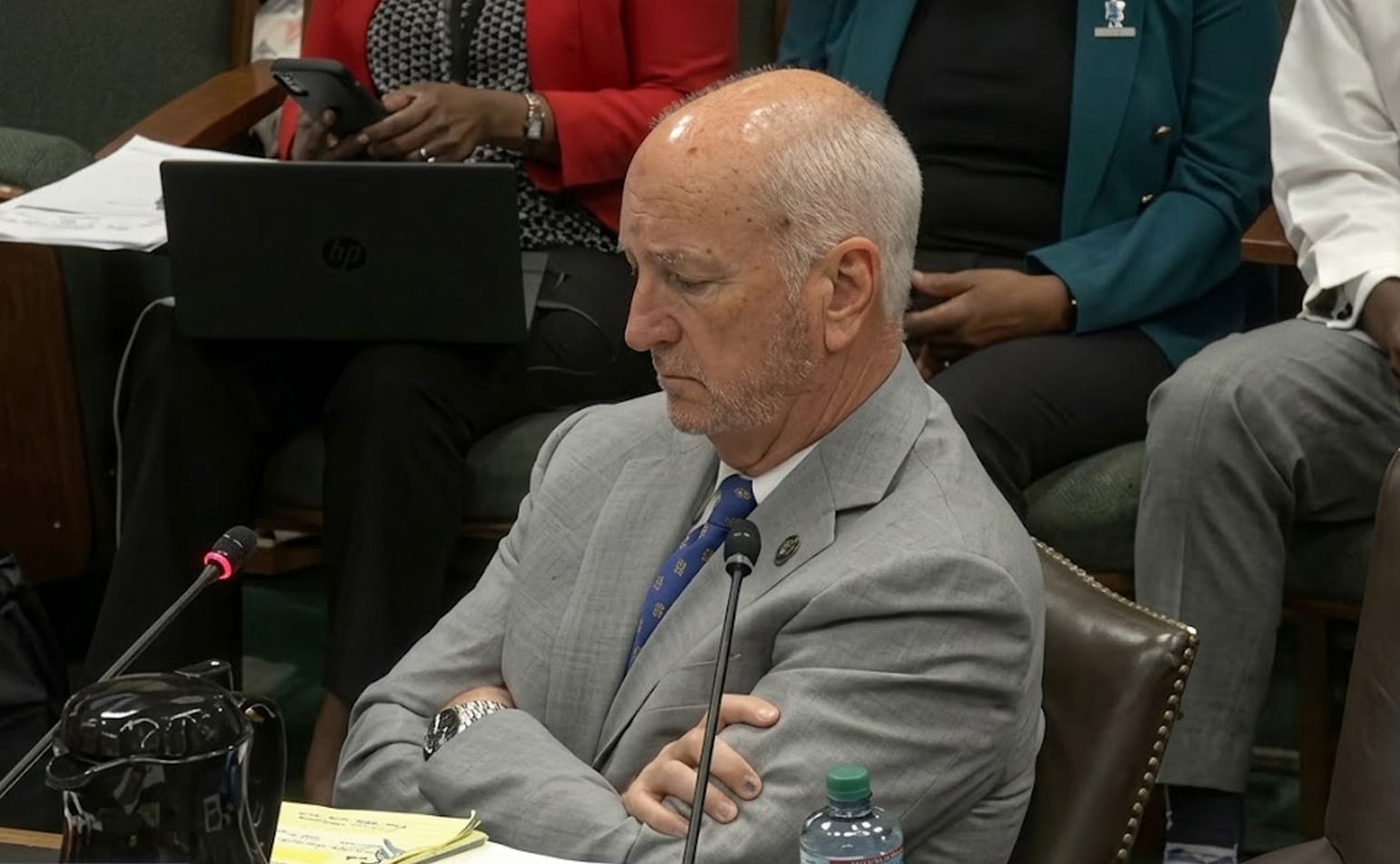
Inside a packed legislative hearing, state Rep. C. Denise Marcelle confronted state Sen. Jay Morris over a proposed congressional map that critics say would shrink Black political influence while locking in a stronger Republican advantage across the state’s congressional delegation.
The exchange quickly moved beyond policy and into a blunt question of political survival.
“Representation once recognized should not be representation later denied,” Marcelle said, her voice cutting through the chamber. “We fought for many years to achieve two congressional districts, and what your legislation does is seek to reduce that.”
At issue is Senate Bill 121, a Republican-backed proposal to redraw Louisiana’s congressional districts following federal court rulings that struck down the current map as an unconstitutional racial gerrymander.
But what unfolded in the hearing made clear that compliance with the court ruling is only part of the political equation.
Morris defended the plan by arguing the existing map had been invalidated and that new lines were necessary. He also made explicit what critics say is the true objective: increasing Republican representation in Congress.
“I think it would bode well for the country and the state to have more Republicans in Congress,” Morris testified.
That answer sharpened the divide.
Marcelle pressed further, pointing to voter registration figures discussed during the hearing that suggest Republicans represent roughly 36 percent of Louisiana voters.
“You feel they should have 83 percent representation in Congress,” she said. “Help me understand why your thought process is that y’all should have more than what you should have according to the numbers.”
The question hung in the room because it struck at the core of the dispute: whether political power in Louisiana should reflect voter strength or be engineered through district design.
As the hearing escalated, Marcelle tied the redistricting effort to broader conditions in the state, pointing to Louisiana’s persistent rankings near the bottom nationally in education, health outcomes, poverty, and incarceration.
“How can we get any worse off than we are?” she asked. “We like 48th, 49th in everything.”
The exchange reflected a deeper frustration in many African American communities that political control has not translated into improved conditions for the state’s most vulnerable residents.
Morris responded by outlining Republican policy priorities, including lower taxes, reduced federal regulation, expanded energy production, and stricter criminal justice policies. He argued those priorities would improve Louisiana and the nation.
But Marcelle returned to the question of who benefits from political structure itself.
She accused lawmakers of ignoring public input gathered during statewide hearings where residents urged “fair maps” and equitable representation.
“We spent money traveling all over the state to ask folk for their input,” she said. “What you’re saying under your testimony is that you didn’t consider any of that.”
Morris denied dismissing public input and said the proposal was based in part on previous maps and ongoing legal uncertainty following court rulings.
Still, the underlying conflict remained unresolved.
At several points, Marcelle challenged the idea that political dominance should be treated as a legitimate governing goal.
“You do represent more than Republicans,” she said near the end of the exchange.
The hearing comes as Louisiana remains at the center of national voting rights battles over racial gerrymandering, congressional representation, and the future of Black political power in the South.
Civil rights advocates argue that reducing Louisiana to a single majority-Black congressional district would significantly weaken Black voting influence in a state where African Americans make up nearly one-third of the population.
Organizations such as the NAACP and voting rights attorneys have already signaled that legal challenges remain possible if the map is enacted.
But beyond courts and legal briefs, the exchange in Baton Rouge reflected something more immediate: a growing sense among African American lawmakers that the ground beneath their political gains is shifting again.
The confrontation was not framed in abstract terms.
It was direct, personal, and rooted in a long history of Black voters fighting for recognition in a system that has repeatedly redrawn the boundaries of their influence.
For many watching the hearing, the message was unmistakable: the fight over maps is not about geography.
It is about whether Black political power in Louisiana is durable or still negotiable.


