


Voting Rights Debate Escalates as Stacey Abrams Accuses House Speaker Mike Johnson of Reviving Jim Crow-Era Concerns
Abrams’ comments came in response to Johnson’s defense of recent Supreme Court rulings on congressional redistricting.

WASHINGTON — A national debate over congressional redistricting intensified this week after civil rights advocate Stacey Abrams accused House Speaker Mike Johnson, a Louisiana Republican, of endorsing policies she says echo the discriminatory legacy of Jim Crow-era voting restrictions.
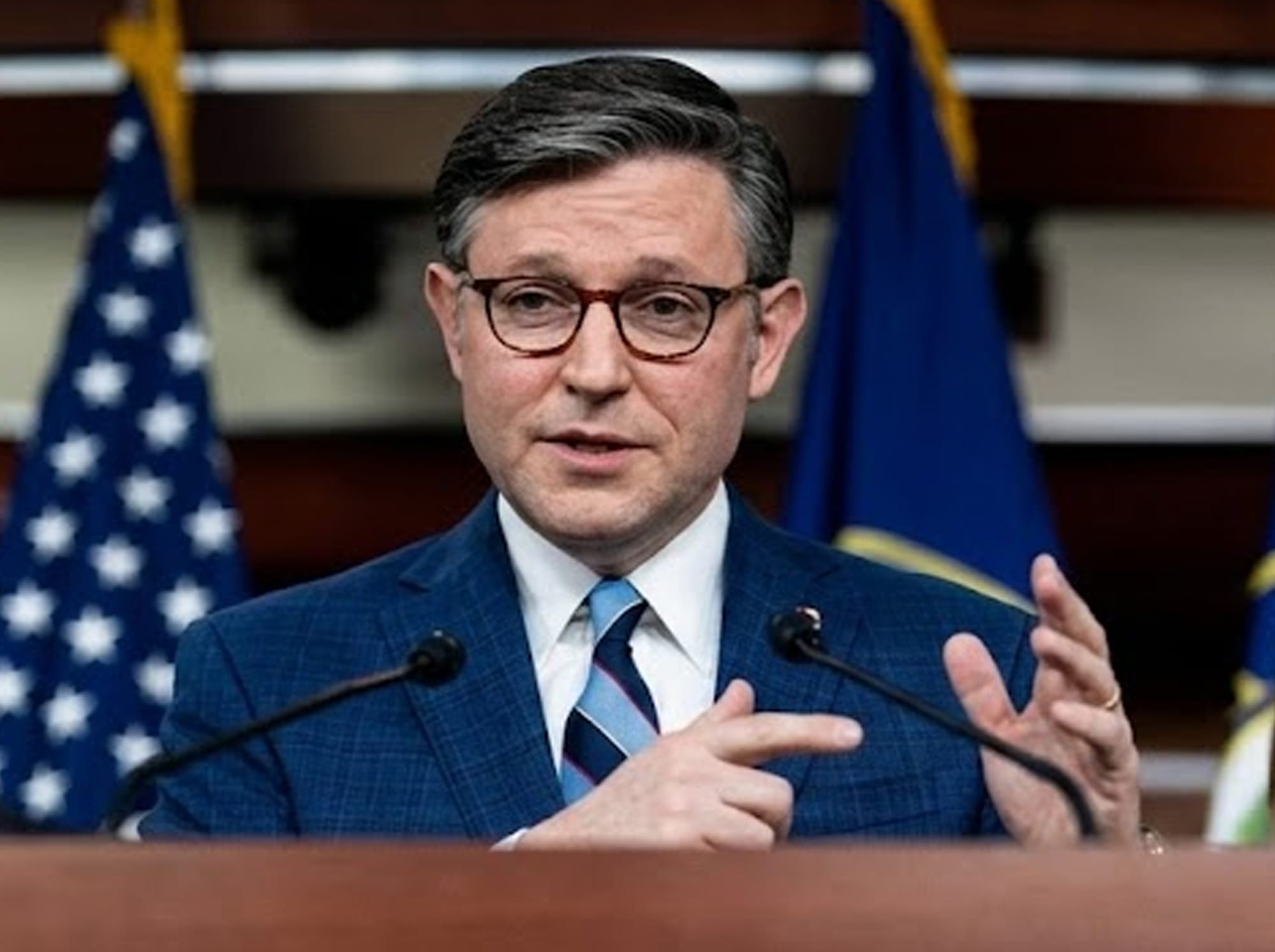
Abrams’ comments came in response to Johnson’s defense of recent Supreme Court rulings on congressional redistricting. Johnson argued that federal courts reaffirmed the principle that districts must be drawn without racial considerations and said prior Louisiana maps were ruled unconstitutional.
“You cannot draw lines based on race,” Johnson said, describing the ruling as a correction that restores fairness and consistency to the electoral system.
From Abrams’ perspective, however, the concept of “race-neutral” redistricting cannot be separated from America’s historical struggle over voting access—particularly in the South, including Louisiana, where Black political participation was systematically restricted for decades.
Speaking from a civil rights lens shaped by the legacy of segregation and the Voting Rights Act of 1965, Abrams argued that policies framed as neutral have often produced unequal outcomes in practice. She pointed to historical barriers such as literacy tests, poll taxes, and grandfather clauses, which were once widely used across Southern states to suppress Black voter participation while maintaining a veneer of legality.
The Voting Rights Act of 1965 is widely regarded as a landmark federal intervention that outlawed discriminatory voting practices and expanded access to the ballot for Black Americans. Abrams contends that weakening protections tied to that era risks reopening old patterns of exclusion.
“Race neutrality has never been neutral,” Abrams said, arguing that demographic realities in Southern states make race and political representation deeply interconnected in redistricting decisions.
She also referenced historical at-large voting systems, which civil rights advocates have long criticized for diluting Black voting strength by preventing communities from electing representatives of their choice.
Johnson, who represents Louisiana, maintained that the Supreme Court’s ruling reinforces constitutional limits on using race as a factor in drawing district lines and ensures that electoral processes remain legally consistent across states.
Abrams, however, countered that rigid interpretations of race neutrality can result in diminished minority representation, reigniting a decades-long legal and political debate over how to balance equal protection principles with safeguards against racial vote dilution.
“What he is celebrating is the return of Jim Crow to the South,” she said, warning that the implications could undermine hard-fought gains in Black political representation.
The dispute underscores ongoing national tensions surrounding redistricting, voting rights enforcement, and the interpretation of civil rights-era protections in modern electoral law. As court challenges continue across multiple states, the issue remains central to debates over representation, fairness, and democracy in America.


