


Building a Sanctuary: How One Southern University Student is Reclaiming the Black Beauty Supply Experience
Entering the beauty supply sector required Smith to confront the rigid realities of a highly globalized market.

BATON ROUGE, La. — While most college seniors spend their final semesters focusing entirely on exams and graduation, Southern University finance major Macie Smith is managing a much larger balance sheet: the operations of two growing beauty supply storefronts.
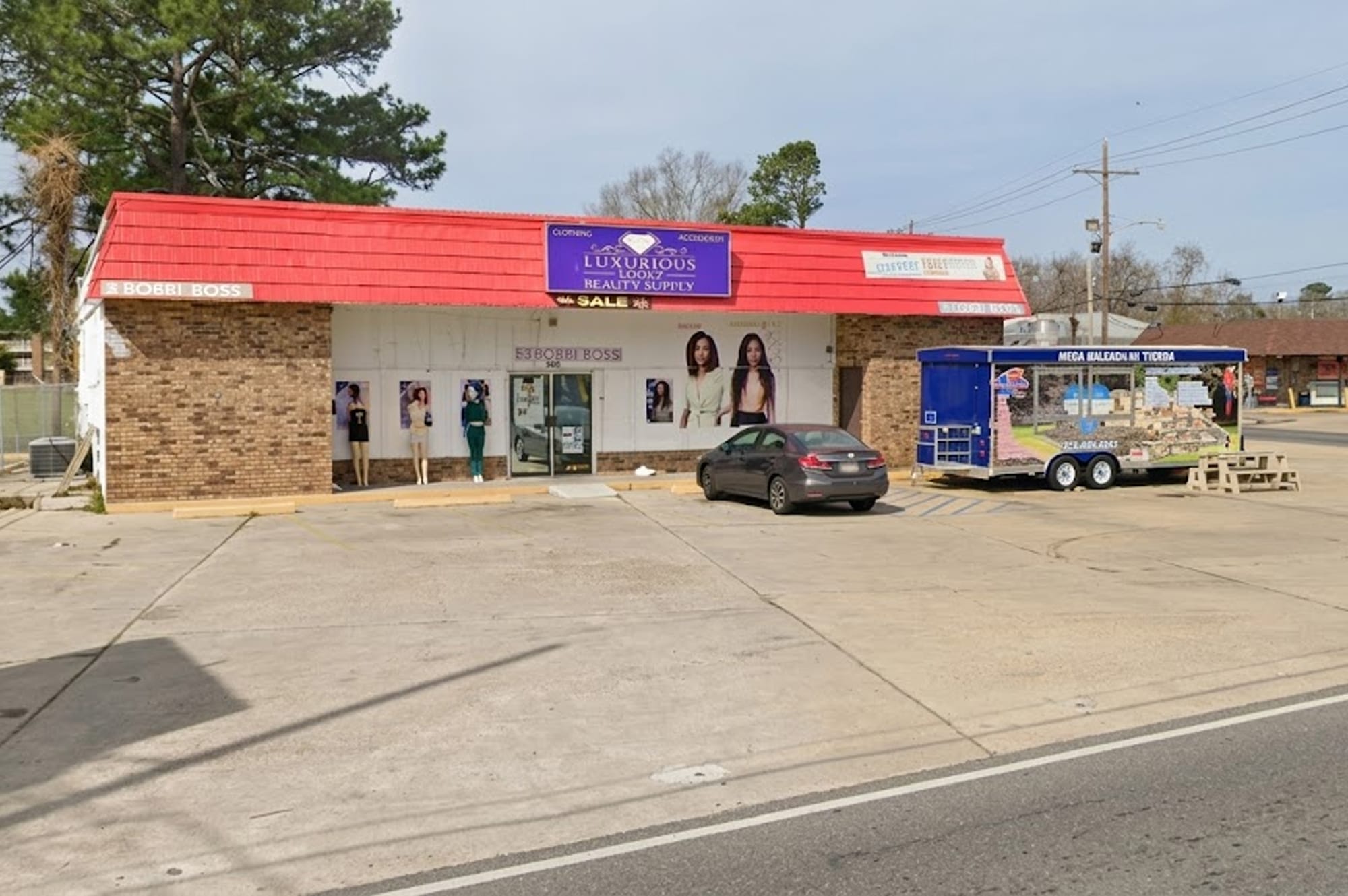
Her expansion, headlined by Luxurious Lookz at 2932 Highland Rd. and supplemented by Mays Beauty Supply, is designed to reshape how Black college students experience hair care retail. By establishing a direct footprint near a major collegiate corridor, Smith is actively challenging systemic industry norms, turning what has historically been a transactional, sometimes alienating shopping experience into a community sanctuary.
"I want us to feel appreciated," Smith said. "I want us to feel like we matter when it comes to the stuff that we need. It should feel like home."
Securing the Global Supply Chain
Entering the beauty supply sector required Smith to confront the rigid realities of a highly globalized market. Because the manufacturing hubs for human and synthetic hair extensions are overwhelmingly concentrated in East Asia, Smith bypassed domestic middlemen to work directly with Chinese braiding hair vendors.
To bridge the cultural gap, she taught herself foundational business phrases in Mandarin—learning terms for "How are you?" (Nǐ hǎo ma), "beauty" (měilì), and "account" (zhànghù).
The journey, however, included sharp institutional hurdles. A dismissive, negative in-person meeting with a foreign manufacturer left her with a sour interaction. Rather than backing down, Smith used the slight to solidify her corporate mission, engineering a retail space explicitly built on mutual respect—a stark alternative to the hyper-surveillance and customer friction Black women frequently report experiencing in beauty supply stores outside their community.
Resilience Against Retail Realities
Operating a full-time business as a 23-year-old student has tested Smith’s discipline. In addition to demanding academic course loads, her storefronts have faced real-world retail pressures, including multiple instances of shoplifting.
While retail theft frequently derails independent startups, Smith has leveraged the adversity to reinforce her customer-first approach.
"Shoplifting is everywhere, but how I bounce back from it is honestly just to keep going," Smith said. "I don't change the way that I treat everyone else just because one person made a mistake."
This perspective extends directly to her pricing strategy. Acknowledging the financial constraints faced by her student demographic, Smith routinely audits her inventory to accommodate tight collegiate budgets.
"It's a lot of people that come in with certain budgets," Smith noted. "I love to help them with their budget because not everyone has it all the time."
A Blueprinted Legacy
Local analysts point out that while Black consumers drive the multi-billion-dollar hair and beauty market, they hold a disproportionately small percentage of retail ownership. Smith is utilizing her formal finance curriculum at Southern University to dismantle that trend, applying corporate strategy and data-driven decision-making directly to her expansion.
Backed by what she describes as a strict, faith-based foundation, Smith views her dual-store footprint not simply as a collegiate milestone, but as the blueprint for a sustainable, community-owned legacy.
"Keeping God first and making sure that He is in the center of everything you're doing," Smith said. "When He's in the center, everything is going to work out."


