


Louisiana cracks down on drug vaping near schools while youth nicotine addiction remains a separate battle
Louisiana is cracking down on drug vaping near schools while youth nicotine use remains a growing concern.

SHREVEPORT, La. — Louisiana has taken a tougher criminal approach to vaping around schools, but the new law does not mean every student caught with a vape pen within 2,000 feet of a school is facing a year in jail.
That distinction is at the center of a growing debate over how Louisiana should respond to youth vaping.
Act 305, which took effect Aug. 1, increases penalties when a person violates Louisiana's controlled dangerous substance laws while smoking, vaping or otherwise abusing a controlled substance on school property, within 2,000 feet of school property or on a school bus.
For certain marijuana-related offenses covered by the law, the enhanced penalty can include up to one year in jail and a fine of as much as $1,000.
But nicotine is different.
A teenager using a nicotine vape near a school is not automatically subject to the new one-year criminal penalty simply because the device is within the 2,000-foot zone. Nicotine products are regulated under Louisiana's tobacco laws and school policies, while marijuana and other controlled substances fall under the state's controlled-dangerous-substance laws.
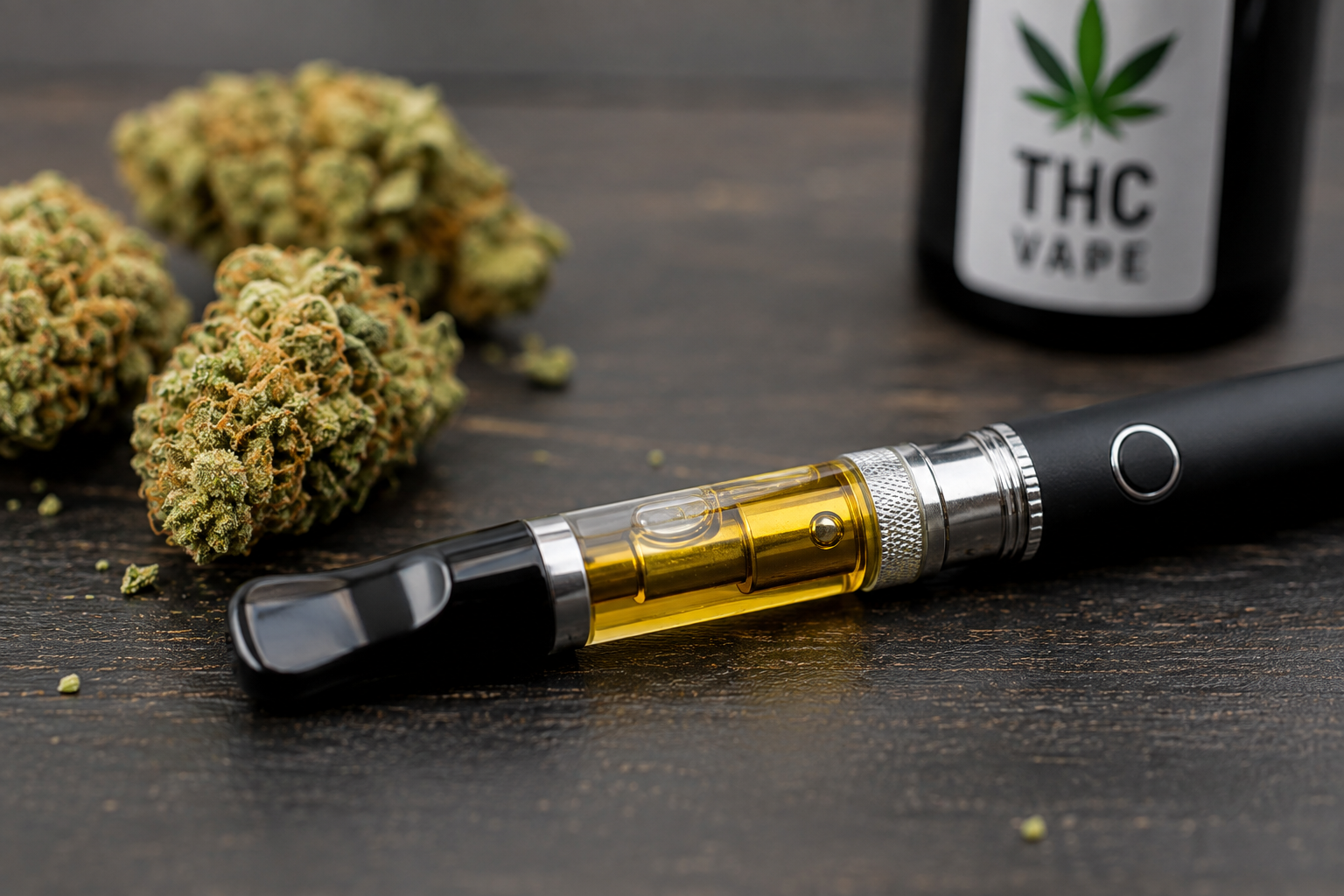
That legal distinction is becoming increasingly important for schools that are encountering both types of vaping.
One vape pen can represent two very different legal problems
School administrators generally have to determine what substance is involved after a vaping incident.
A nicotine device may result in confiscation, disciplinary action, parent notification or other consequences under school policy.
A device containing THC or another controlled substance can potentially move the matter into a criminal investigation.
Louisiana law already permits schools to discipline students for tobacco use and possession of controlled substances on school property. State law specifically addresses students who use tobacco or possess controlled dangerous substances in school buildings, on school grounds or on school buses.
The new law adds another layer by extending enhanced criminal penalties beyond the school property itself and into a 2,000-foot school zone.
For families, that means what is inside the vape can matter as much as the vape itself.
Louisiana lawmakers already recognized nicotine as a separate crisis
The Legislature's actions show that lawmakers understand the nicotine problem cannot be addressed solely through criminal enforcement.
In 2025, Louisiana created the Youth Tobacco and Nicotine Cessation Task Force to study nicotine use among people younger than 21.
The task force was directed to examine how young people begin using cigarettes, e-cigarettes and other vapor products, as well as the role of peer behavior, accessibility, marketing and environmental factors.
It was also instructed to examine prevention, school-based education, public health campaigns and access to evidence-based cessation programs.
That is significant because it moves the state's response beyond the question of punishment.
It asks a different question:
Why are young people starting to use nicotine in the first place — and what can be done to help them stop?
The national trend is more complicated than “vaping is rising”
The latest national data also require a closer look.
Youth vaping has not continued rising at the rate seen during the peak of the youth e-cigarette epidemic.
Instead, federal data have shown a substantial decline in youth e-cigarette use over recent years.
But the remaining users present a serious concern because many are using frequently enough to indicate potential nicotine dependence.
That means a lower overall prevalence does not necessarily translate into a smaller problem inside every school.
A school can have fewer students vaping while still dealing with students who are highly dependent on nicotine.
And those students may need something very different from suspension or confiscation.
They may need cessation support.
The products themselves have changed
Another reason the problem is difficult for schools to control is the evolution of vaping devices.
Today's products can be small, disposable and easy to conceal. Some contain nicotine. Others are marketed or used for cannabis.
The same general-looking device can therefore produce very different health, disciplinary and legal consequences.
Federal regulators have also been dealing with an enormous market of unauthorized vaping products. In 2025, federal officials announced the seizure of nearly 2 million unauthorized e-cigarette products with an estimated retail value of $33.8 million in one operation.
The size and variety of the market make enforcement more complicated for parents, schools and regulators.
Louisiana's approach is moving in two directions
The state is now pursuing two different strategies at the same time.
One is enforcement.
Act 305 gives prosecutors and law enforcement a stronger tool when controlled substances are smoked or vaped in designated school zones.
The other is prevention and cessation.
The Youth Tobacco and Nicotine Cessation Task Force was created specifically to examine nicotine addiction among young people and develop strategies involving prevention, education and treatment.
Those approaches are not necessarily contradictory.
But they address different problems.
A student selling or using marijuana in a school zone may face criminal consequences.
A student addicted to nicotine may need intervention, counseling and cessation assistance.
Treating both situations simply as “vaping” risks missing the underlying issue.
Schools are caught in the middle
For educators, the challenge is particularly difficult because the school is often the first place the behavior is discovered.
Administrators must determine whether the student violated school policy, whether another substance is involved, whether parents should be contacted and whether law enforcement needs to be notified.
Technology has become part of that response.
Some schools have installed vape-detection systems designed to alert administrators when vaping occurs in bathrooms or other areas where students may avoid direct supervision.
But detection technology can tell administrators that vaping occurred. It does not necessarily tell them why the student is vaping or what substance was used.
That distinction ultimately requires human intervention.
The health question may be bigger than the criminal one
Pediatricians have warned that nicotine exposure during adolescence is particularly concerning because the brain is still developing.
Louisiana's own Youth Tobacco and Nicotine Cessation Task Force legislation acknowledges the risks of early nicotine exposure, including effects on brain development and increased likelihood of addiction.
That makes the state's new law only one piece of a much larger public health problem.
If a teenager is vaping nicotine because of addiction, putting that student out of school may remove the student temporarily from the classroom without addressing the addiction.
If the vape contains THC or another controlled substance, the legal implications are different and potentially much more serious.
Schools therefore face a balancing act between discipline, public safety, health intervention and criminal enforcement.
What parents should understand
Parents should not assume that the new law means every nicotine vape found near a school automatically becomes a criminal case carrying a one-year sentence.
The critical questions are:
- What substance was in the device?
- Was the substance controlled under Louisiana law?
- Where did the conduct occur?
- Was the student on school property, within the 2,000-foot zone or on a school bus?
- What does the student's school district policy require?
Those distinctions could determine whether a situation remains primarily a school disciplinary matter or becomes a potential criminal case.
The bigger question for Louisiana
Louisiana has now strengthened its response to controlled-substance use around schools.
At the same time, the state is studying how to prevent and treat nicotine addiction among young people.
That may ultimately prove to be the more consequential part of the debate.
The number of young people who vape may be declining nationally, but the students who remain users can still face addiction, respiratory problems and other health consequences.
For Louisiana schools, the challenge is no longer simply finding the student with the vape.
It is determining what is being vaped, why the student is using it, whether someone is supplying it and what intervention will prevent the behavior from becoming a long-term addiction.
The new law gives Louisiana another enforcement tool.
But stopping youth vaping will require more than a criminal penalty.


